Thursday, 11 December 2014

3 Ways to Make Your Company less risky


Company building is inherently risky business. Here's how to improve your odds of success.
Based on a recent article by the Author of Built to sell and the creator of The Sellability Score the following three areas represent the largest risk factors that could destabilize your business based on your strategy

“These three constituencies make up the legs of the dependency stool. If you're overly reliant on any one leg, your business wobbles easily and the value of your company goes down.” John Warrillow

Here's an overview of how to improve the value of your business using The Switzerland Structure:

Employee Dependence
Close your eyes and imagine you're sitting at your desk when you hear a knock at the door. It's an employee who is tendering their resignation. Before you open your eyes, consider which of your employees would you least like to be standing in your doorway. This is the person who your business has become too dependent upon.
To increase the value of your company, start weaning your business off its reliance on this person by cross training other staff on parts of their job and documenting their unique approach to doing their work.

Customer Dependence
To increase the value of your company, ensure no one customer amounts to more than 15 percent of your overall revenue. If you find yourself overly reliant on one buyer, you have two choices:
1) Dramatically increase your revenue while keeping your business from this customer constant, or
2) Stop cross selling so much. Most of us cross sell to our best customers so much that we end up selling too many products and services to a handful of friendly customers. This feels good but can detract from the value of your company because you end up selling things you have no business providing and becoming overly dependent on a handful of loyal customers.

Supplier Dependence
Often overlooked, supplier dependence can be just as scary to a potential investor as customer dependence. If you have one company that supplies most of what you sell, you're vulnerable if there's a change in your supplier's business. Imagine for a second your main supplier decides to start selling directly to your customers or closes up shop entirely.

“Like a good baseball manager who always has a reliever ready to pitch, cultivate a bench of one or two alternate suppliers and give them a piece of your business, even if it means giving away a point or two on price. The supplier diversification will serve you well when it is time to sell your business.” John Warrillow

By targeting a strategy at lowering the risk in each area you will not only substantially de-risk your business but also significantly increase its value. Take the free Sellability Score today and see how wobbly your business is.


Sunday, 7 December 2014

Want to Improve your Business Value in 2015? Start Now!

Most company owners probably don’t want to sell their business right now – but they want to know they could. That’s the theory behind The Sellability Score, an online tool developed by author and serial entrepreneur John Warrillow. 

The Sellability Score – created based on market research with business owners and mergers & acquisitions professionals – is a free, 30-question self-assessment that helps business owners determine how saleable their company actually is. 

“You know you’re building an asset that has value and could fund your retirement, let you travel, or whatever you’re passionate about.”says Warrillow

So what makes for a business that other companies would want to acquire? Here a sneak preview of four top criteria.
  1. Management Team. “Any buyer will say, ‘What happens after you leave?’” says Warrillow. You want to answer that question definitively by having a strong second-in-command who knows the business and is committed to carrying on over the long term.
  2. The Switzerland Factor. Much as Switzerland has thrived by being studiously neutral, Warrillow suggests your business should do the same. Specifically, “you have to be neutral toward any one supplier, customer or employee – that is, you can’t be overly dependent on them.” You want to demonstrate that you’ve hedged your bets with a diversified client base and “no one employee has the secret sauce.”
  3. The Five Times Factor. Your business looks a lot more attractive if you’re able to scale it – specifically, says Warrillow, “Can your business scale five-fold without adding five times the costs?” A hotel running at only 20% occupancy is the perfect example of an underutilized asset that has room to grow; software companies also typically scale easily without adding lots of employees. But even in industries that usually don’t scale well – like law firms – there is room for innovation with new offerings like Legal Zoom, an online service that helps people create their own legal documents.
  4. Revenue Stream. In your personal life, you don’t want to live paycheck-to-paycheck – and to create a saleable business, you don’t want to live project-to-project, unable to predict future cash flow. Instead, your goal is to create a steady and consistent revenue stream with a subscription or membership model. That’s common for fitness centers or magazines, but even unlikely suspects can make it work (Warrillow cites a Canadian snowboard instructor who got tired of giving individual lessons and now has a thriving business selling subscriptions to his YouTube channel with exclusive snowboarding videos).

Let’s say your Sellability Score is top-notch and you’re ready to move – what next? Warrillow advises most business owners to work with an advisor or broker to help sell their company, because “their job is to create competitive tension, get multiple bidders, and run the process for you.”

Want to learn more? Business Doctors offers workshops and more information on his website.


Wednesday, 3 December 2014

No time to plan?

No time to plan, focused only on this week or next?


Starting a business and actually making it work requires a plan, a strategic plan, something that's alive and taps into your "why" your passion, something that targets that energy in to a vision of the future that's clear and measurable. Put simply, when you plan a business you begin to understand it as a business. When you don't plan a business but still go into business for yourself, you more than likely created a job.

For example with a printing business we go straight into the printing, not the structure of the organization, the future growth and direction of the business, the various marketing strategies etc.. There is a critical difference between having a business and the business of building a business, the latter requires it to be scale-able and must be built ensuring it’s repeatable and ultimately sell-able! 

So, if you ever want to get out of the grind and truly grow a business you need to plan to grow it. And by plan I mean a strategic plan, a plan that must be reviewed to ensure you are tracking towards your goals and that you will achieve your vision.

We've all heard it before - ""If you don't know where you're going, any road'll take you there". Only when we sit down to develop a strategic plan do we see building a successful business is so much more than that. Without planning a business becomes reactive, we resort to making decisions not based on the ultimate journey but the immediate situation we are faced with.

Doing a plan, the very act of doing it, almost in its very nature is enough to take you to the next level as an entrepreneur. So if you want to find out how you can work ON your business and not IN it follow these 10 steps to help you start your strategic plan today!
These ten practical steps to business success will help you to realize the full potential of your business.


Don't waste any time in realizing the full potential of your business!


Monday, 1 December 2014

Will your business be more valuable this time next year?

Will your business be more valuable this time next year?
 For many, January is a time of rebirth and resolutions. It’s a month to reflect on last year’s achievements and to set goals for the year ahead.
 Some people will set personal goals like losing weight or quitting a nasty habit, and most company owners will set business goals that focus on hitting certain turnover or profit milestones. But if your goal is to own a more valuable business in 2015, you may want to plan around some of the following areas:
·         Write down at least one process per month. You know you need to document your systems, but you may be overwhelmed by the task of taking what’s inside your head and putting it down in writing for others to follow. Resolve to document one system a month and by the end of the year you’ll own a more sellable company.
·         Offload at least one customer relationship. If you’re like most business owners, you’re still your company’s best salesperson, but this can be a liability in the eyes of an acquirer, which is why you should wean your customers off relying on you as their point person. By the time you sell, none of your key customers should think of you as their relationship manager.
·         Create a recurring revenue stream. Valuable companies can look into the future and see where their revenue is going to come from. Recurring revenue models can vary from charging customers a small amount for a special level of service to offering a warranty or service contract.
·         Get your Sellability Score. All goals start with a benchmark of where you’re at today, and by understanding your company’s Sellability Score, you can pinpoint how you’re doing now and which areas of your business are dragging down your company’s value.

A lot of company owners will set New Year’s resolutions around their turnover or profits for the year ahead, but those goals are blunt instruments. Instead of just building a bigger company, also consider making 2015 the year you build a more valuable one.
 Ensure that you don’t begin 2015 without a focused plan by completing the Scalability score now and incorporating findings in what will then be your biggest year yet! Its fast, its free and confidential!


Wednesday, 26 November 2014

Business Doctors - What we do


Who We are:

We are a network of experienced business people, passionate about sharing our skills and experiences.

Our aim is to offer hands-on support to business owners enabling them to overcome their individual challenges and helping them to achieve their growth aspirations for growth. Our clients may be striving to achieve the next level of growth in turnover and profitability, working hard without seeing the results, facing staff issues or planning to build the value of their businesses for financial security.

What we do:

We are dedicated to helping small and medium sized businesses achieve their Vision through:

Free Strategic Health Check
Strategy – Full Facilitation and Support
Focus – Sales and Profit Growth
People – Engagement and Organisational Performance
Implementation and interim support: Management, Sales, Operations and HR
Recruitment – Advice and Psychometric Testing
Training and Development
Access to Funding and Financial Support

If you are looking to grow your business, get more customers and increase your profits, it’s worth taking the time to review how your business is performing now and get some advice on how to hit the big time.

We are NOT Consultants…We’re Experienced Business people

What makes us different?

In tough economic times, strong business succeed while weak ones fail. Business doctors have been helping small and medium sized business (SMEs) get stronger, survive and thrive since 2004

We have developed 10 practical steps to business success that will help you realise the full potential of your business. Using these we demonstrate:
1.      The antidote to the Dragons Den
2.      Breaking Big formula
3.      How to achieve Business Freedom


We have developed cutting edge propriety software that when applied to your business will:

1.      Make your business 71% more valuable
Through an analysis of 6,955 businesses, we’ve discovered that companies that achieve a Scalability Score of 80+ out of a possible 100 receive offers to buy their business that are 71% higher than what the average company receives. Whether you want to sell your business soon or keep it forever, the ultimate litmus test of any business involves a simple question: would someone want to buy your business?
2.      Answer the 8 questions you need to know about a business you are growing, buying, selling or advising.
Business Attractiveness Survey gives you a clear picture of whether your business is 'hot' (or not). We unpack the major risk areas to privately-held businesses so that you can see where you need to reduce risk, and increase your attractiveness in the market. You get a clear understanding of the overall risk level of your business, specific action areas, and our suggested cost of Equity capital to use in Valuation/financing decisions.

But don’t take our word for it see what our customers say!

“With a more than 30% sales increase in the 12 months following the Business Doctors process ACS increased its net margin from -2% to + 9%.” Richard Rainford – Managing Director, Amenity Contract Services Ltd

“In the last 6 months sales have grown by 10% and margins have increased by 4%” Simon Parkinson – Managing Director, Abrasive Technologies

“Through Business Doctors hands on assistance we increased our YOY sales by 24%” Steve Copley – Managing Director, TASC Group LTD

Where to find us online?


Monday, 24 November 2014

What the value of your business?

Do you own a valuable business?

When you spend a lifetime trying to build a successful business, it leaves little time for much else, including thinking about an exit plan; but even if you are planning to pass the business on to family, you want to ensure you are offering them a valuable business. Whether you are creating an exit plan for the short term or for 20 years hence, it’s never too late or too soon to start understanding – and increasing – the value of your business.

Seventy percent of all business owners in today’s market plan to sell or pass their business on within 10 years. But 76% don’t have an exit plan, and many do not know the value of their business.

A well thought out exit plan can:
  •          Protect the legacy of your business;
  •          Build value for your business;
  •          Provide financial security for your family and your stakeholders;
  •          Make it easier to deal with any unexpected events (illness, accident or death); and
  •          Help to prepare you and your business for the future.


The Sellability Score is a highly effective tool to initiate the process of building a plan. By using it as a gauge to measure how sellable your business would be today, it can help you focus on where to increase your efforts within your business. The online tool is quick and easy to use, and it generates a personal report that highlights:

  • What you should consider when thinking of transitioning your business;
  • How saleable your business actually is;
  • The likelihood of receiving a premium offer; and
  • What your financial options are.


After completing the questionnaire online, you will be provided with a score for your business and a summary of what the score means. Meanwhile, I will be notified that you have completed the questionnaire and I will receive a copy of the comprehensive report for your business. Once I receive the report, I will set up a time with you so we can meet, review the recommendations together, and discuss any next steps required.


I’m looking forward to discussing your Sellability Score with you. 

Thursday, 20 November 2014

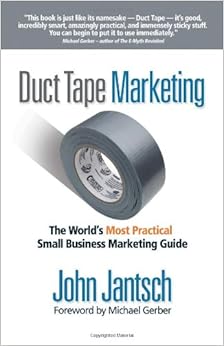
Duct Tape Marketing and Business Strategy

Duct Tape marketing is a great resource and guide for drawing up your marketing strategy. I have incorporated relevant steps from the business doctors 10 steps to Strategy Made Easy (SME) to illustrate how the aspects from Duct Tape marketing strategy fits into your overall business strategy

Know Your market. As SMEs we do not take the time to truly define what our ideal customer looks like. Our efforts are aimed at selling to the entire market resulting in a hit an miss process that under delivers on our revenue expectations. A quick way to get an insight into this is to look at your top customers and analyze where your highest returns are coming from, then hone in on the aspects that make those customers buy your products

"So What Factor". Ensuring differentiation of our services as SMEs are essential, this entails finding your "so what" factor and should be applied to all products and services. To assist we have developed our WOW Factor Developer that ensures you manage costs while adding value in you differentiation strategy (more on that in our next blog)

Now apply the aspects defined in the first two steps into the final steps for your marketing plan as per Duct Tape marketing by John Jantsch below:

Create information that educates. Think of your marketing materials, web sites, white papers, marketing kits as information products.
Package the experience. Use design to evoke the appropriate emotional response from your ideal prospect.
Generate leads from many points. Your lead generation efforts must allow your prospects to experience your firm from many different angles.
Nurture leads along the logical buying path. Build the lead conversion system for before, during, and after the sale.
Measure everything that matters. The secret is in finding and measuring the intangibles – those things that eventually add up to profit.
Automate for leverage. Embrace the Internet or else. Create access, stimulate community, capture innovation, and build knowledge to automate the basic delivery elements of your information business.
Commit. Create daily, weekly, monthly, and annual marketing calendars, make marketing your new habit.